
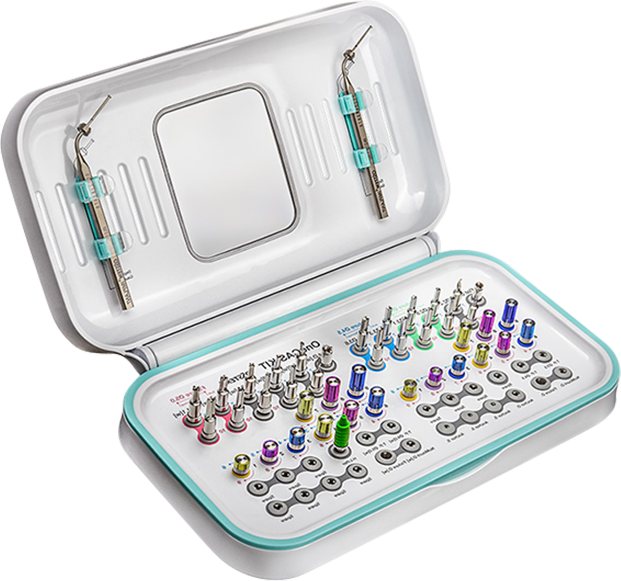
A surgical kit is more than a container for drills and drivers. Its configuration influences preparation, instrument identification and the consistency of the clinical sequence. Evaluation should begin with the implant system and approved surgical protocol rather than appearance alone.
Clear instrument sequence
An effective layout helps the team identify each stage of osteotomy preparation and implant placement. Labels, defined positions and color identification can reduce unnecessary searching during the procedure.
- Logical progression from initial preparation to final placement
- Clear identification of drill diameter and working sequence
- Dedicated locations for drivers, pins and torque instruments
Control and compatibility
Instruments must match the selected implant system, platform and surgical protocol. Depth control, drill geometry and driver connection should be reviewed together, using current product documentation.
- System-specific compatibility
- Defined depth and diameter options
- Reliable driver engagement and torque transfer
Cleaning, inspection and replacement
Reusable instruments require validated cleaning and sterilization procedures. Before each use, the clinical team should inspect cutting surfaces, markings, connections and moving parts, and replace worn or damaged instruments according to the applicable instructions.