
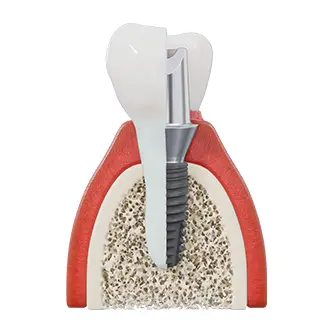
The implant-restoration system
An implant-supported restoration is a coordinated system rather than a single component. The endosseous fixture is positioned in bone, an abutment or restorative interface connects to the fixture, and a screw or cement-retained prosthesis completes the restoration.
Connection geometry, component fit and the relationship between the restorative parts all influence stability, retrievability and the final prosthetic result.
Material interfaces
Titanium and titanium alloys are widely used for load-bearing implant components. Ceramic materials may be used in selected restorative interfaces where optical behavior and tissue-facing design are important.
Accurate component engagement is essential. The design must control rotation, seating and load transfer while limiting gaps or uneven contact between mating surfaces.
Digitally guided planning
Digital planning combines three-dimensional bone information with soft-tissue and proposed-tooth data. The combined model helps the team evaluate the implant position in relation to available bone and the planned restoration.
The same digital reference can support surgical guide design, restorative planning and fabrication of implant-supported superstructures.
This educational overview does not replace professional training, clinical judgment, current product labeling or instructions for use.