
Hybrid component concepts
Some implant components combine a titanium or titanium-alloy member with an oxide-ceramic member. Mechanical interlocking features can be designed so that the materials engage securely after processing.
The geometry of recesses, protrusions and retention features determines how forces are transferred across the interface.
From scan to prosthesis
A digital workflow begins with the implant position and a reliable reference geometry. Intraoral scan data can record the soft tissue, neighboring teeth and the orientation of the implant connection.
The design system then aligns the digital implant library with the scan and positions the proposed prosthesis according to the restorative plan.
Custom abutment design
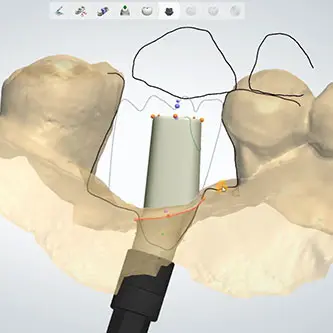
A reference abutment can be adjusted digitally to suit the subgingival profile, restorative axis and available occlusal space. The transition from the implant connection to the supragingival restoration should support both mechanical and tissue-management objectives.
Final dimensions and angles must remain within the validated limits of the selected implant and restorative system.
This educational overview does not replace professional training, clinical judgment, current product labeling or instructions for use.